Paris, 1998
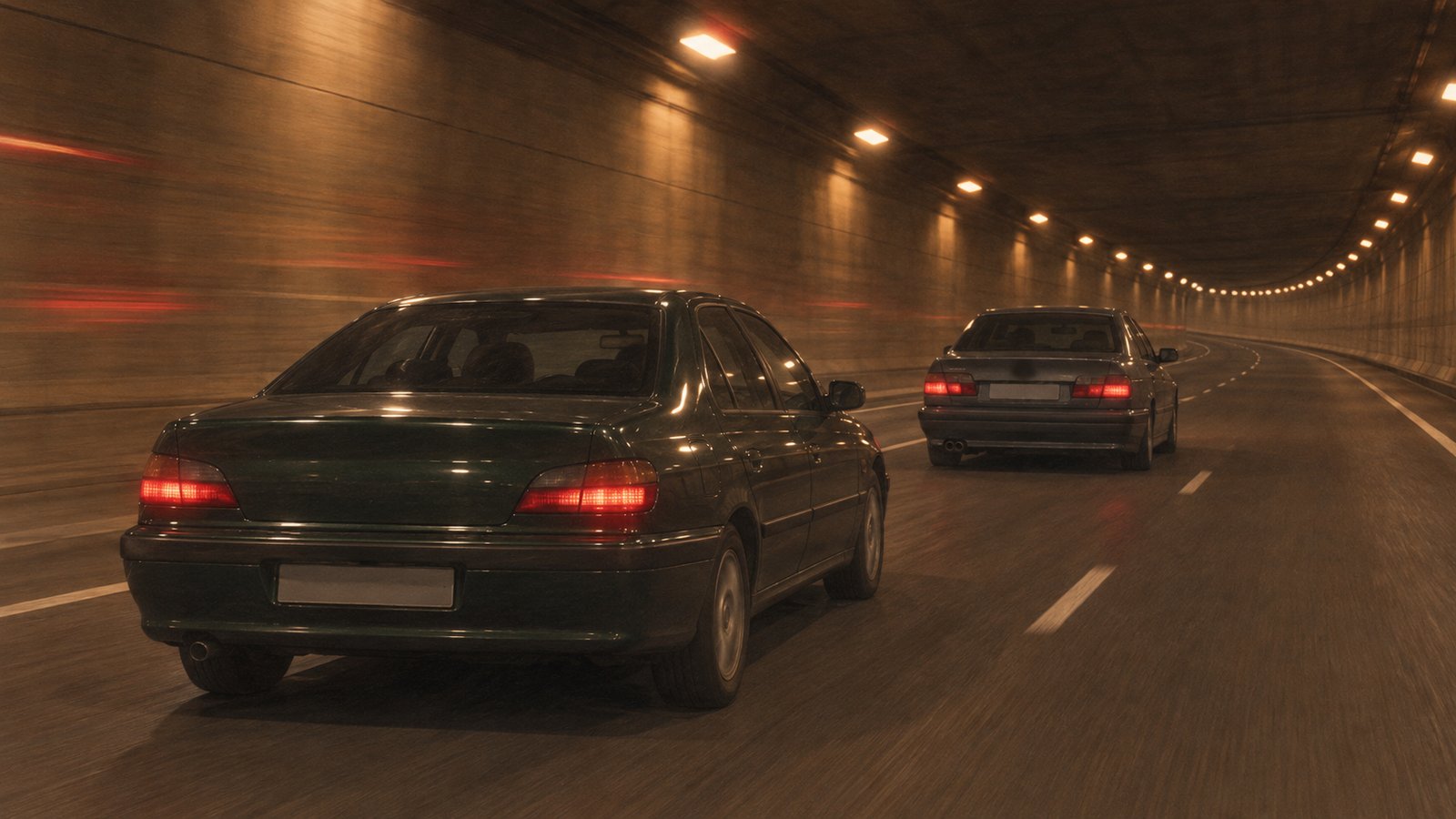
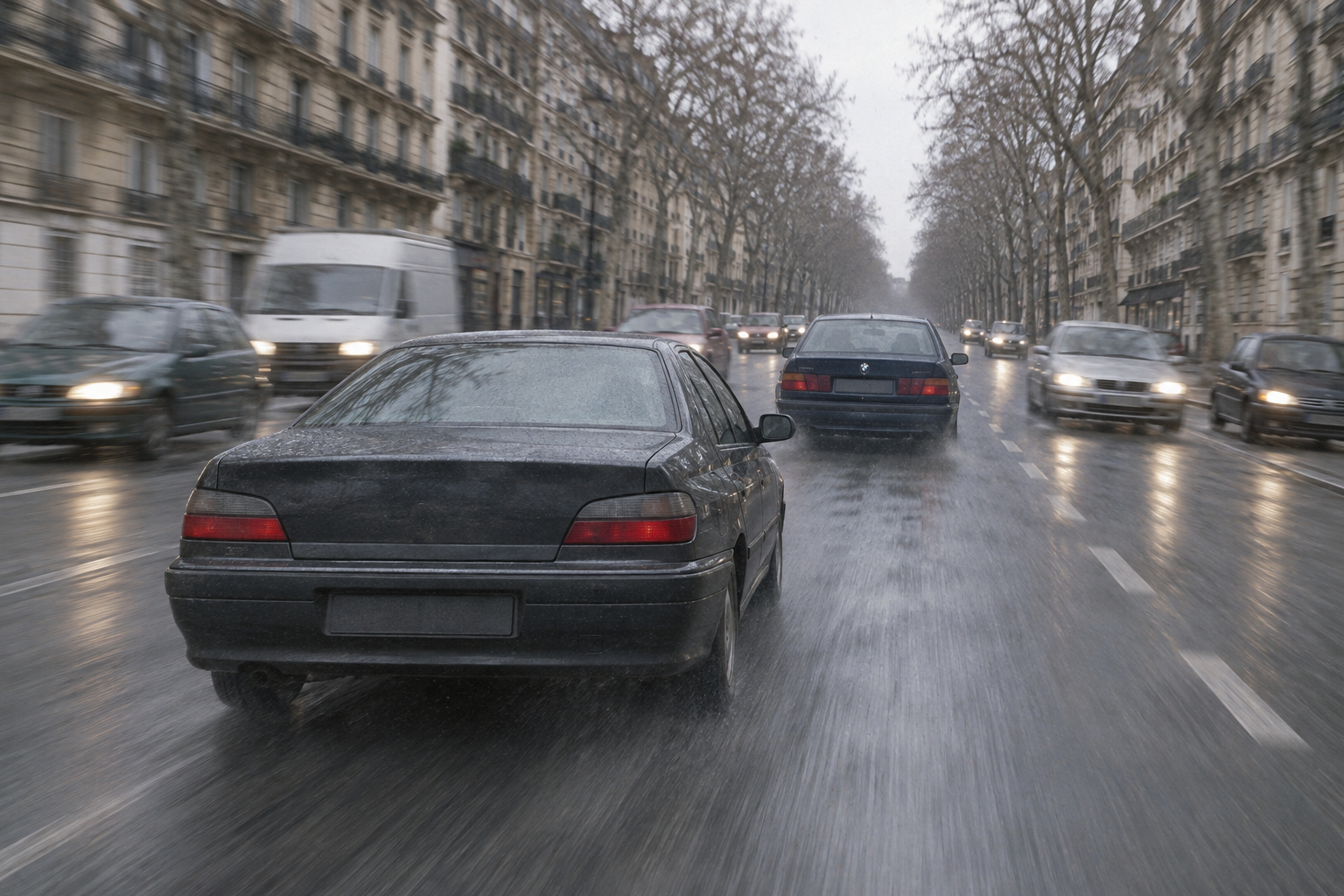
A Peugeot 406 is travelling the wrong way along a Parisian carriageway. There is nothing particularly remarkable about the Peugeot. It is the sort of car that spends its life occupying company car parks, collecting children from school and making unremarkable journeys between French provincial towns. Ahead of it is a BMW. Between them are several lanes of approaching traffic.
On screen, Robert De Niro is behind the wheel and Jean Reno occupies the passenger seat. Neither has much to say. The Peugeot changes direction sharply, finds a gap and accelerates towards another collection of oncoming vehicles. The gap closes, another opens, and the Peugeot moves again. What is extraordinary is not the speed alone but the precision with which the cars are being driven. The distances between them are sometimes frighteningly small, and each change of direction requires the weight of the Peugeot to be transferred from one side of the car to the other before the next movement can begin.
Behind the camera is an American film-maker approaching seventy who understands precisely what the drivers are doing. John Frankenheimer has been here before. Thirty-two years earlier, he placed cameras amongst the racing cars of Grand Prix. Now, towards the end of his career, he is attempting something that requires many of the same skills in an altogether less accommodating environment: a living European city.
Ronin arrived in 1998, when cinema was discovering an increasingly persuasive alternative to physically performing extraordinary things in front of a camera. Frankenheimer had little interest in that alternative. He understood that difficulty could be communicated through the image, and that a car being driven exceptionally well possessed qualities that could be lost if its movements were manufactured independently of the physical world. He wanted the driver to make the manoeuvre, the car to respond and the camera to be close enough to register both. The result was one of the most accomplished exercises in automotive choreography ever committed to film.
The Man Behind the Camera
John Frankenheimer understood cars. That may sound a modest qualification for a director preparing a film with several elaborate chases, but it shaped almost every decision he made. Many directors understand what a fast car looks like. Fewer understand what a fast car is doing — how a driver initiates a slide across a junction, how the weight of the car is being managed and what must happen next if it is to leave the junction pointing in the right direction. Frankenheimer had raced as an amateur in his twenties. He knew.
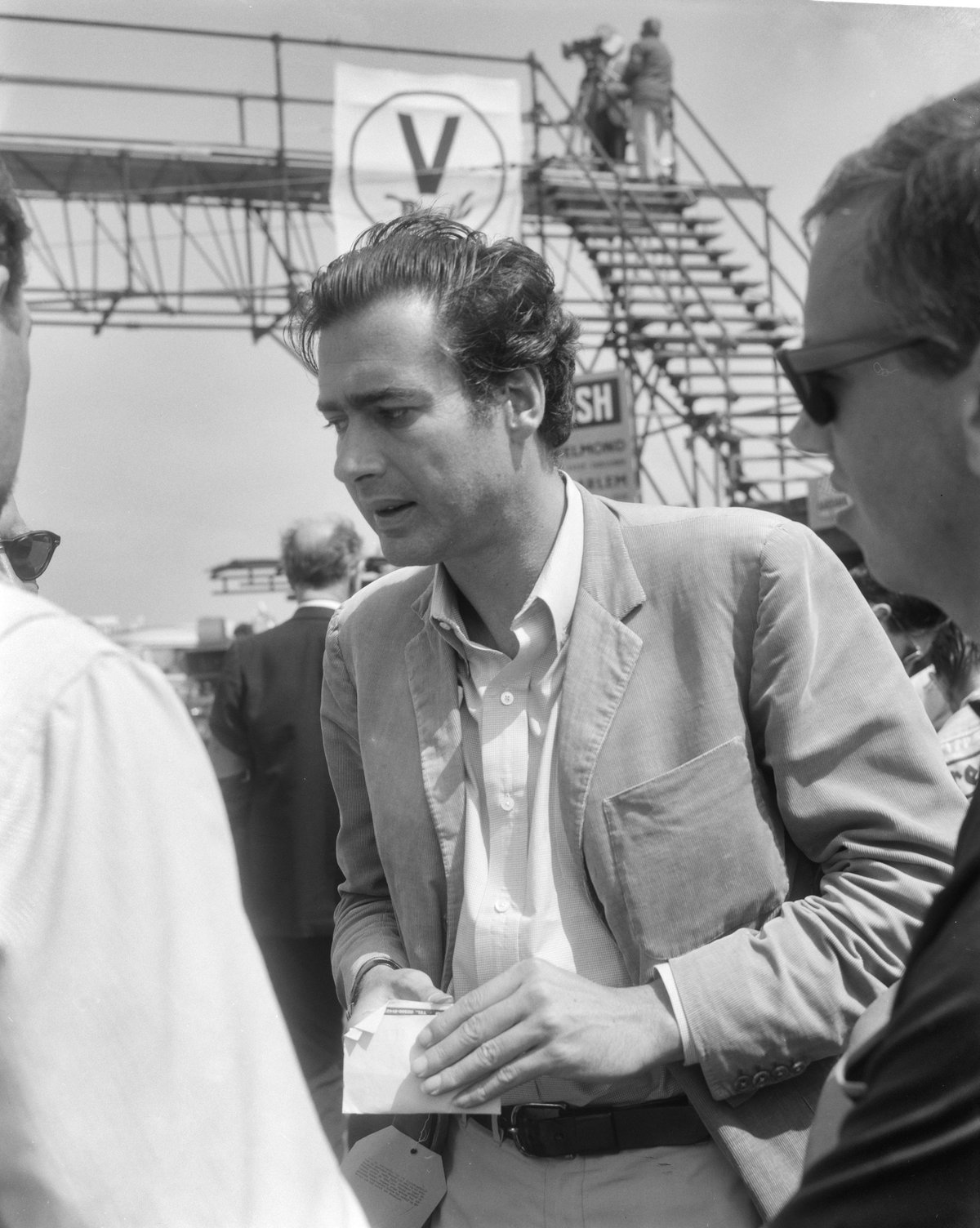

That fascination found its most obvious expression in Grand Prix, released in 1966. Working with the machinery and personalities of contemporary Formula One, he photographed Graham Hill and other drivers at racing speeds and developed ways of placing the camera within the immediate environment of the sport. The camera travelled with the cars and occupied positions ordinarily inaccessible to spectators. It captured the movement of the driver's hands, the proximity of competing machinery and the changing relationship between tyres and road. Audiences did not need to understand the engineering to appreciate the physical effort involved, and by the time he made Ronin, that understanding had matured into something approaching a film-making philosophy.
His reputation had been established through films about institutions, conspiracy and people operating inside systems they did not entirely understand. The Manchurian Candidate, Seven Days in May and The Train each explored a different aspect of competence under pressure, and Ronin belongs comfortably within that tradition. Its characters are professionals whose previous lives are never fully explained — specialists who served organisations that may no longer require them, suspicious, observant and accustomed to deciding with incomplete information.
Frankenheimer takes particular pleasure in showing people who know their work. A weapon is examined, a building assessed, a route considered, a vehicle specified. The preparations hold the attention because the characters understand their significance: small decisions made in apparently inconsequential moments will determine whether much larger operations succeed. Nowhere is that professional intelligence more apparent than in the cars.
- Role
- Director
- Also known for
- The Manchurian Candidate (1962), The Train (1964), Grand Prix (1966)
- Contribution
- Planned every movement of every car in advance, closed the roads and refused process shots. Reused the camera mounts from Grand Prix and shot twenty-eight days of second-unit material himself.
A Car for the Job
When Larry, the driver, is asked what he needs for the operation, his answer is practical: something very fast, something that can shove a little. He wants an Audi S8. Cinema has spent decades teaching audiences to read automotive aspiration — a character's arrival in an expensive sports car announces wealth, confidence, taste or importance before a word has been spoken. Larry is interested in none of those things. He requires a specification, and the film allows that choice to tell us something about the man making it. Skipp Sudduth, who played him, asked to drive the S8 himself, and Frankenheimer let him.
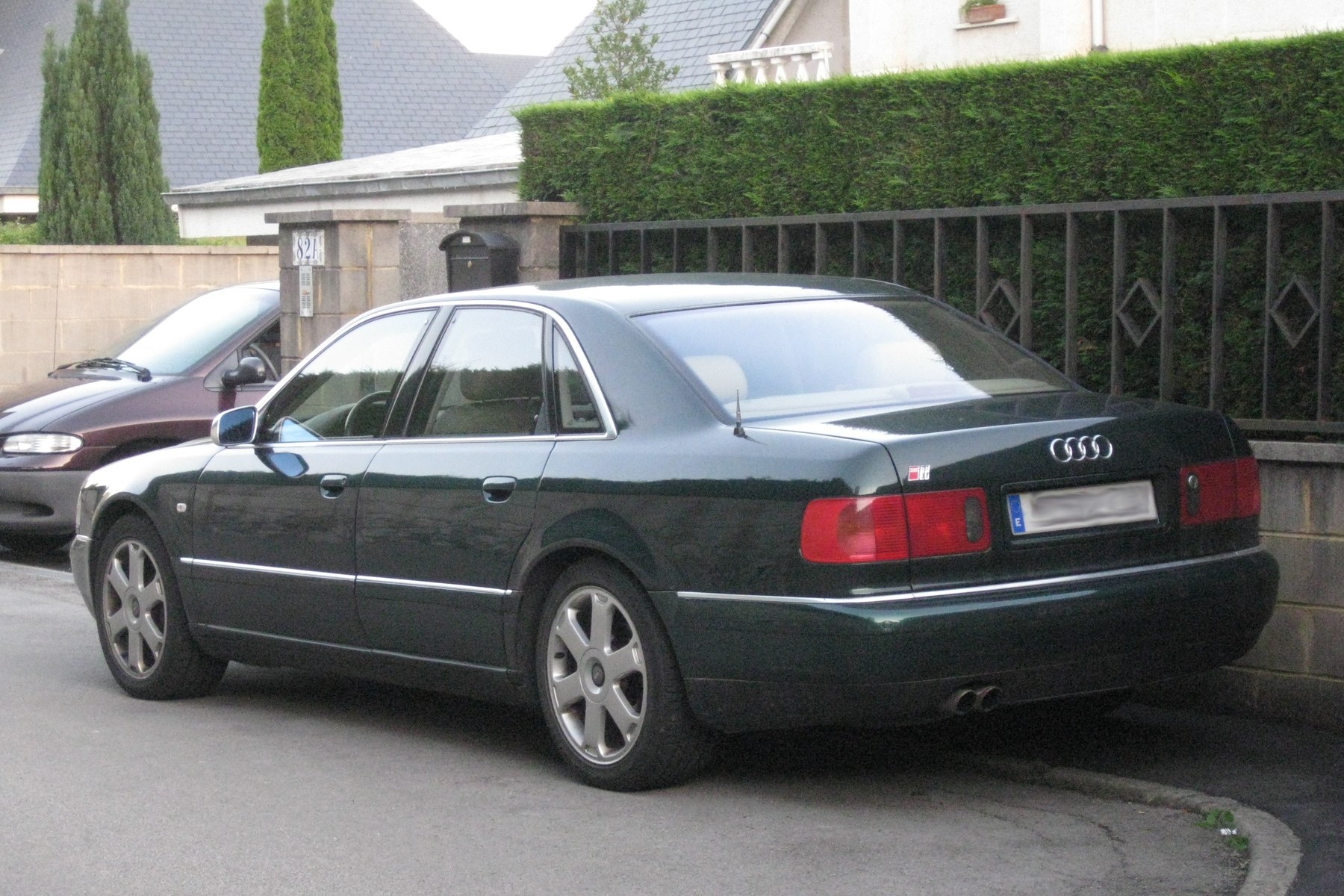

The first-generation S8 was an intelligent choice for a film about professionals operating discreetly in continental Europe. Beneath the restrained exterior of Audi's aluminium-bodied executive saloon sat a 4.2-litre V8, four-wheel drive and the ability to cover considerable distances at considerable speed. None of that was apparent to the casual observer. The S8 could wait outside a hotel without attracting attention, disappear into motorway traffic and carry several people and their equipment, and its appearance suggested corporate responsibility rather more readily than criminal enterprise.
That mattered in the late 1990s, when European manufacturers were producing an especially interesting generation of high-performance saloons. BMW had established that a practical four-door car could possess the character of something far more specialised, Mercedes had been exploring the same territory for decades, and Audi brought its own mixture of engineering sophistication, traction and understatement. Here was performance for people who did not wish to advertise it, and Ronin is populated by precisely those people. Speed is something to be used when necessary, not announced in advance. Even the most desirable car in the film has been acquired to do a job.
- Make
- Audi
- Model
- S8 (first generation, D2)
- Colour
- Dark Green
- Screen Driver
- Skipp Sudduth
- Role
- Larry’s choice for the Nice pursuit, asked for by its specification rather than its image. Skipp Sudduth asked to drive it himself, and Frankenheimer let him.
Casting the European Saloon
The automotive landscape of Ronin is deeply satisfying. Citroën XMs and Xantias, Peugeot 406s and 605s, BMWs, Audis and Mercedes-Benzes occupy its streets, and the French police give chase in Citroën ZXs. Although the film is an American production, its roads feel thoroughly European. Frankenheimer allows the cars to belong to the places in which he photographs them. A Citroën XM in the south of France requires no explanation; a Peugeot 406 in Paris is almost invisible. The vehicles look as though they were present before the characters arrived and will remain after they leave.

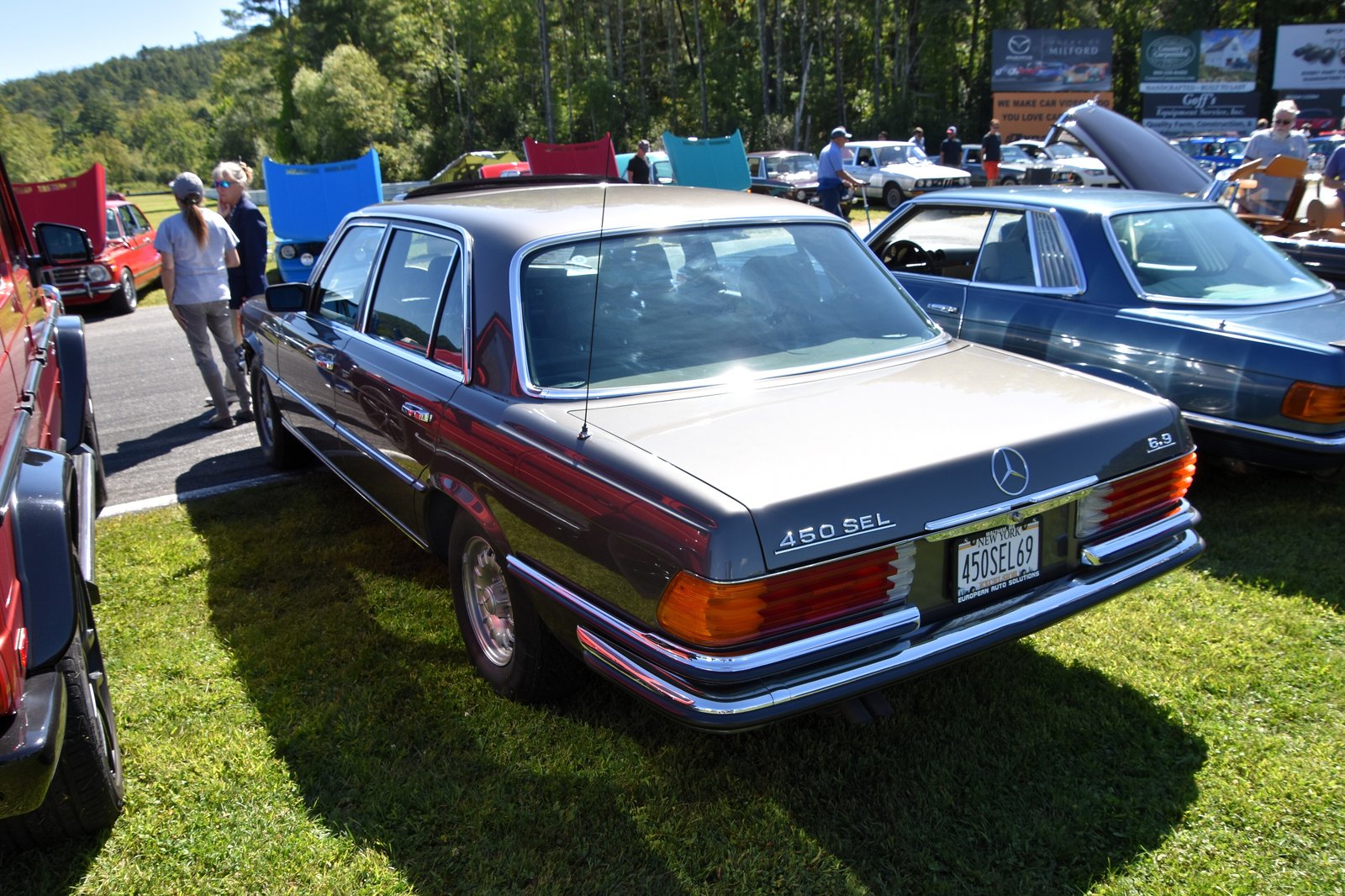
Within that apparently ordinary collection are several quite different automotive personalities. The Audi represents contemporary engineering and understated performance. The Mercedes-Benz 450SEL 6.9 belongs to an older generation — its V8 of almost seven litres and hydropneumatic suspension gave a formal luxury saloon abilities at odds with its appearance, and by 1998 it was an ageing executive car with an extraordinary mechanical inheritance. Frankenheimer reportedly owned one and was determined to put it in the film. The Citroën XM occupies another tradition entirely, distinctively French in appearance and engineering and making little attempt to imitate the German idea of the executive car.
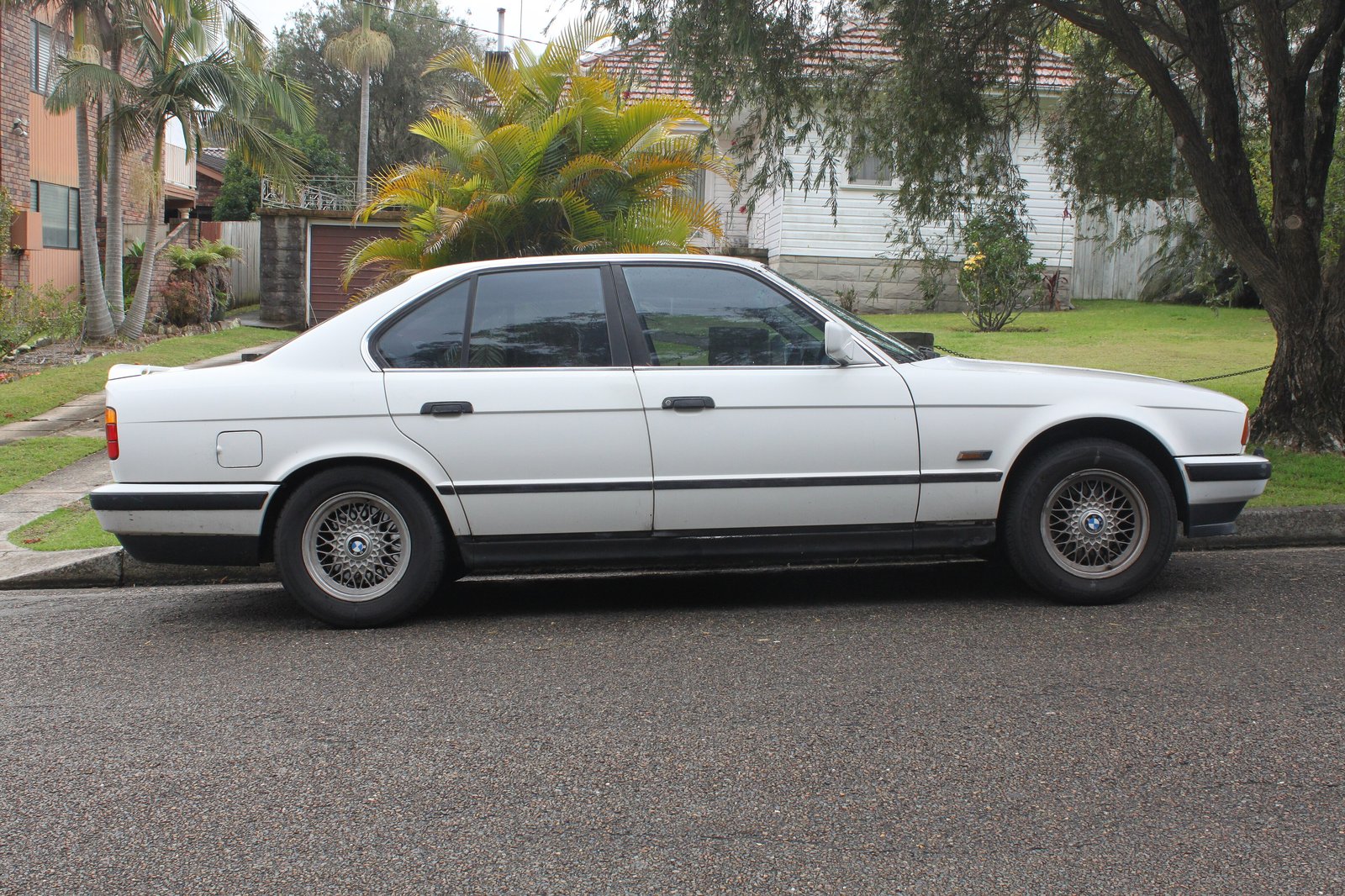
Then there is the dark E34 BMW of the Paris chase, one of the film's defining images. It is often taken for an M5, but production accounts describe four 535i models for the Paris streets. Opposite it is the Peugeot 406, perhaps the most intriguing piece of casting in the film. It is not glamorous, nor does it belong to the same performance hierarchy as the Audi or the BMW. Yet Frankenheimer gives it the opportunity to demonstrate qualities rarely celebrated in cinema: balance, agility, responsiveness and the ability to exploit limited space.
Introduced in 1995, the 406 belonged to a familiar Peugeot tradition: relatively unassuming saloons with an ability to reconcile ride comfort and handling. Where the BMW sent its power to the rear wheels, the Peugeot drove through its fronts. The two cars brought quite different mechanical characteristics to the same pursuit, giving the drivers different problems to solve and the camera two distinct kinds of movement to observe. The Peugeot becomes formidable through the way it is driven. The cars of Ronin possess mechanical identities, but those identities acquire dramatic importance only when somebody begins using them. Frankenheimer casts the drivers as carefully as he casts the machinery.
- Make
- BMW
- Model
- 535i (E34)
- Cars Used
- Four
- Screen Driver
- Michel Neugarten
- Role
- Deirdre’s car and the quarry of the Paris chase, pursued against the traffic by the Peugeot. Often taken for an M5.
The First Pursuit
The first extended chase runs through the old town of Nice. The Mediterranean setting suggests a familiar kind of cinematic luxury — hotels, expensive cars and coastal scenery — and the pursuit quickly removes that comfort. The Audi is set against a Citroën XM carrying the briefcase, with Sam and Vincent backing it up in the Mercedes. The streets narrow, buildings stand close to the carriageway, junctions arrive abruptly and street furniture interrupts the natural path of the cars. The width of the machinery begins to matter almost as much as its performance.

Frankenheimer is particularly good at communicating this. A large saloon approaching a tight corner is a complicated physical proposition: its speed must be reduced, its direction changed and its weight brought under control before acceleration becomes useful again, all while the driver keeps the car ahead in view. There are moments when the Audi appears too large for the task. A movement that would look modest on a circuit becomes substantial when performed between buildings, kerbs and other vehicles.
The Mercedes provides an altogether different spectacle. Its formal proportions suggest a chauffeur-driven arrival at a diplomatic reception, not a rapid change of direction accompanied by protesting rear tyres. The car makes its weight visible — it leans, settles and accelerates, retaining a particular dignity even when asked to behave in a thoroughly undignified manner. The Audi and the Mercedes never become interchangeable action vehicles simply because they share a sequence.
The pursuit also establishes something that will become essential in Paris. Space is a resource. A driver may possess a powerful engine, exceptional brakes and considerable skill, but none of those things can create another metre of road. That metre has to be found.
- Country
- France
- Key streets
- Nice and La Turbie
- Filming period
- 1997–98
- Role in Film
- The setting for the first pursuit, where the original stunt crew was dismissed and Ciné-Cascade was brought in.
Jean-Claude Lagniez
The driving in Ronin needed somebody who could turn Frankenheimer's understanding of cars into a practical programme of film-making. That person was Jean-Claude Lagniez, a Le Mans driver of long standing whose Ciné-Cascade team was brought in at short notice after Frankenheimer dismissed the original stunt crew while filming the first chase at La Turbie, near Nice. Lagniez inherited a director with unusually specific expectations. Frankenheimer was not content to approve a collection of impressive individual stunts; he wanted one manoeuvre to lead convincingly into the next.

That is a far more demanding proposition than a spectacular isolated moment. A driver can prepare a car for a single corner, perform the movement and stop once the camera has it. A pursuit requires several vehicles to work together over extended periods, each entering the frame at the correct moment, at the right speed and in exactly the space allocated to it. Repeatability becomes as important as bravery.
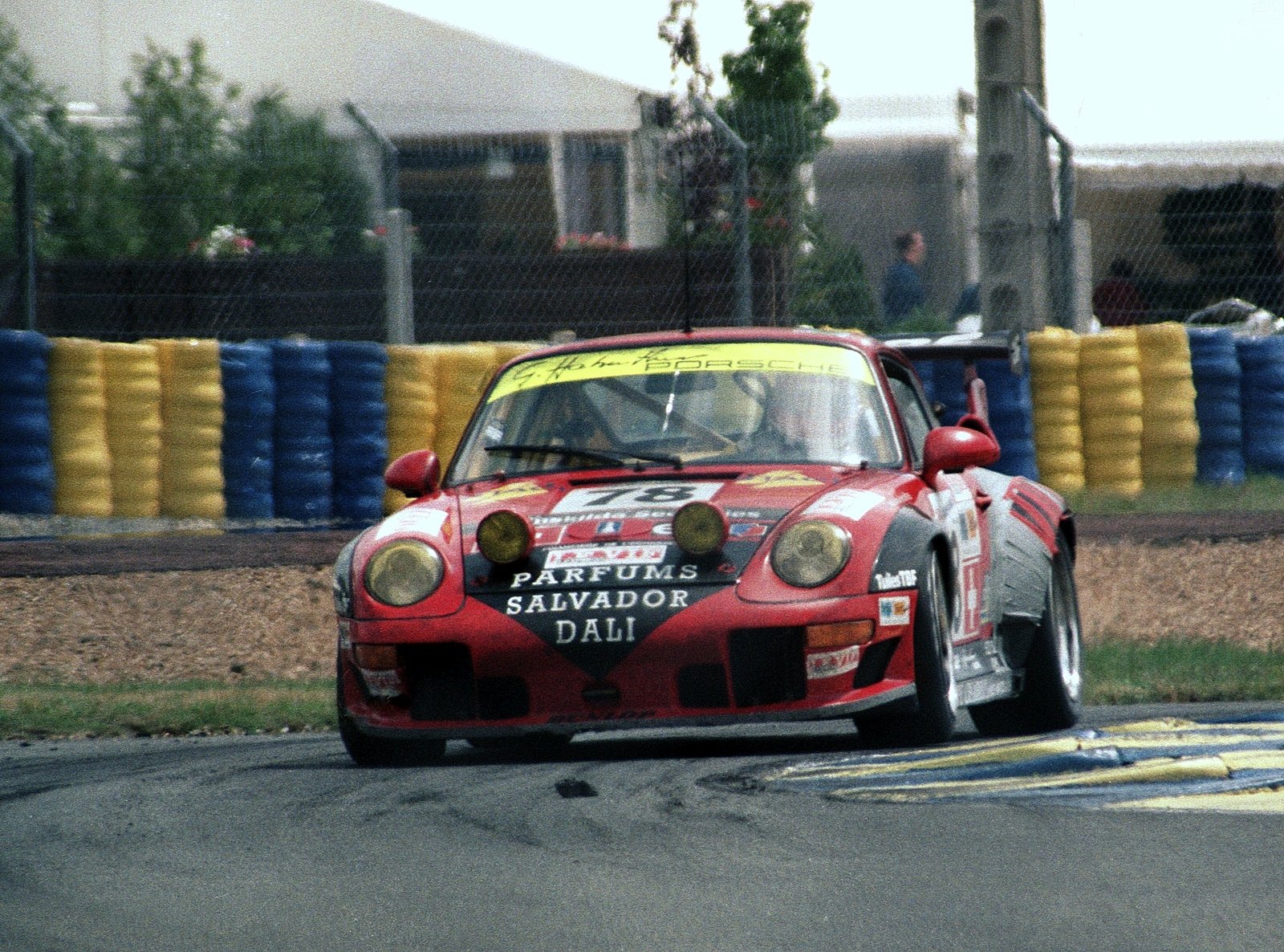
Lagniez drew on drivers with deep motorsport experience. Michel Neugarten drove the BMW in the Paris chase, while Lagniez himself took the Peugeot. The two had won the GT2 class at Le Mans together in June 1997, in a Porsche 911 GT2, only months before filming began. Former Formula One driver Jean-Pierre Jarier was amongst those at the wheels of the oncoming traffic. Racing teaches an awareness of relative movement — how to judge the speed of approaching machinery, anticipate another driver's trajectory and read the changing dimensions of a gap — and those abilities are exactly what is required when cars must pass one another at close quarters for a camera.
The drivers also had to perform. A racing driver selects the most effective line through a corner; a stunt driver may need a different one because the camera must see the car from a particular position. He may have to hold a slide longer than is mechanically efficient, arrive beside another vehicle at a precise moment or pass a fixed point at a specified distance, all without losing the character of fast driving. In Ronin, that discipline would eventually extend beyond the principal cars to the entire moving population of a Parisian road.
- Role
- Stunt driver / car stunt coordinator (Ciné-Cascade)
- Contribution
- A Le Mans driver with eleven starts between 1970 and 2002, brought in at short notice to coordinate the car action. Drove the Peugeot 406 in Paris, with De Niro beside him behind a dummy wheel in the right-hand-drive close-up cars.
Preparing the Impossible
The extraordinary moments in Ronin began with drawings. Frankenheimer sent his production designer, Michael Z. Hanan, out with a group of experts to find where the action could be staged, and the sequences were sketched as storyboards with Ted Boonthanakit. Camera positions were considered and vehicle movements established before the cars arrived. By Frankenheimer's own account, every move for every car was worked out in advance.
The finished film conceals that preparation so effectively that the cars seem to be responding to an environment that continually surprises them — a junction appears, a pedestrian moves, another vehicle occupies a piece of road the pursued car requires. Deirdre and Sam appear to decide with almost no time available. Behind that sensation lies an enormous amount of time spent deciding. Change one car's starting position, or the moment at which it accelerates, and the geometry of the whole scene alters. At speed, those changes accumulate quickly.
The camera adds its own complication. A tracking vehicle following a car has to travel close enough to produce the image without interfering with the movement it is recording, and its driver must understand the choreography as thoroughly as the people performing it. The same applies to the vehicles in the background, whose speed and position establish the distance available to the Peugeot. Each of those drivers has to resist the natural urge to respond to a car approaching from the wrong direction. In the controlled environment Lagniez built, following that instinct at the wrong moment could be more dangerous than holding the agreed course. Every driver had to trust every other driver to perform the movements they had rehearsed, and Frankenheimer's achievement depends upon that collective confidence.
Twenty-seven years earlier, William Friedkin had allowed an element of genuine unpredictability into the filming of The French Connection. Frankenheimer approached the problem from the opposite direction. He set out to anticipate everything. The danger experienced by the audience would be the product not of control being abandoned, but of control being exercised to an extraordinary degree.
Against the Traffic
Paris offers a different driving environment from Nice. The earlier pursuit is defined by restrictive streets; the later one introduces broad roads, tunnels, major junctions and faster traffic, filmed around La Défense and, at night, through the Champerret tunnel. Deirdre drives the BMW, with Seamus in the back. Sam and Vincent follow in the Peugeot, and the briefcase has become almost secondary to the immediate problem of keeping the cars in sight of one another. Each new type of road presents a different problem. A narrow street restricts movement, a junction introduces traffic from several directions, a tunnel removes any escape and a broad carriageway offers speed while increasing exposure to everything else on it. The tempo of the chase changes with the architecture.
Then the BMW and the Peugeot turn against the flow of traffic. Few automotive images communicate danger as immediately. Vehicles that would ordinarily be travelling alongside the driver are now approaching him head-on, and the problem is no longer how quickly the pursued car can travel but how much information its driver can process before the space has gone. A gap opens between two approaching cars and the BMW moves through it. By the time the Peugeot reaches the same position, the relationship between those vehicles has changed, and its driver must find his own route through an environment that is continually rearranging itself. There is always another decision approaching.
Frankenheimer was explicit that none of this was left to chance. The roads were closed to the public, and he recalled having three hundred French drivers at the wheels of the other cars on the road. The oncoming traffic held its lanes at around 35 miles an hour, under orders not to change lanes, while the BMW and the Peugeot ran against it at more than twice that speed. The crew had a matter of hours before the roads reopened.
The restraint demanded of the background drivers is remarkable. Their contribution consists largely of continuing to drive normally while highly abnormal things happen around them, and a modest movement at the wrong moment could compromise the entire manoeuvre. Every approaching windscreen contains another professional, and every apparently inconvenient family car occupies a carefully managed position. The terror experienced by the audience is the product of a great many people remaining calm.
- Country
- France
- Key structure
- La Défense; the Champerret tunnel (at night); the Pont du Garigliano
- Filming period
- 1997–98
- Role in Film
- Closed roads filled with professional drivers for the wrong-way chase. The crew had a matter of hours before the roads reopened.
Inside the Cars
There remained the problem of the actors. Robert De Niro and Natascha McElhone needed to appear to be performing driving that required experienced racing professionals. Cinema has traditionally solved this by photographing actors in stationary or slow-moving cars and combining the results with footage shot elsewhere. Frankenheimer disliked process shots intensely and wanted the actors to inhabit the movement.
For close-ups, the production brought right-hand-drive versions of the cars over from England. The actor sat on the left behind a dummy steering wheel, mirroring every input, while the real driver controlled the car from the right-hand seat, outside the frame. Lagniez and Neugarten drove; De Niro and McElhone appeared to. For other coverage, one BMW and one Peugeot were cut in half and towed behind a Mercedes-Benz 500 E camera car, and elsewhere cameras were fitted in crash boxes, on the cars and inside them. Different images required different methods, but the objective was always continuity of sensation — an external shot of the Peugeot and an image of its occupants should feel like parts of the same journey.
The dummy-wheel cars preserved something very difficult to manufacture through performance alone: the involuntary movement of the human body. The head moves slightly before the body catches up, shoulders press against the seat and the torso tries to compensate for each change of direction. These responses are small and largely unconscious, and an actor concentrating on dialogue or expression struggles to reproduce their timing without the forces actually being present. In Ronin, they were present.
De Niro does not always appear entirely comfortable, and nor should he. By production accounts he was genuinely frightened, and Frankenheimer's wife went out with Lagniez first to prove that it was safe. Sam may possess considerable driving ability within the fiction, but the circumstances offer him very little comfort, and the technique brings the actor into close physical contact with the character's predicament.
- Role
- Stunt driver
- Contribution
- Won the GT2 class at Le Mans with Lagniez in June 1997, then drove the BMW 535i through Paris, in a blonde wig, opposite Lagniez’s Peugeot.
The Camera and the Road
Frankenheimer and his cinematographer, Robert Fraisse, had to turn this complicated physical performance into a coherent visual language. Frankenheimer shot on Super 35 and favoured wide-angle lenses, which hold the foreground and the road beyond in focus together. For tracking shots he used the same bespoke camera mounts he had used on Grand Prix, fixed in place of the front lids of a series of Porsche 911s that could run close behind the cars. Because the driving was done in real time and at real speeds, the camera had no need to manufacture velocity.
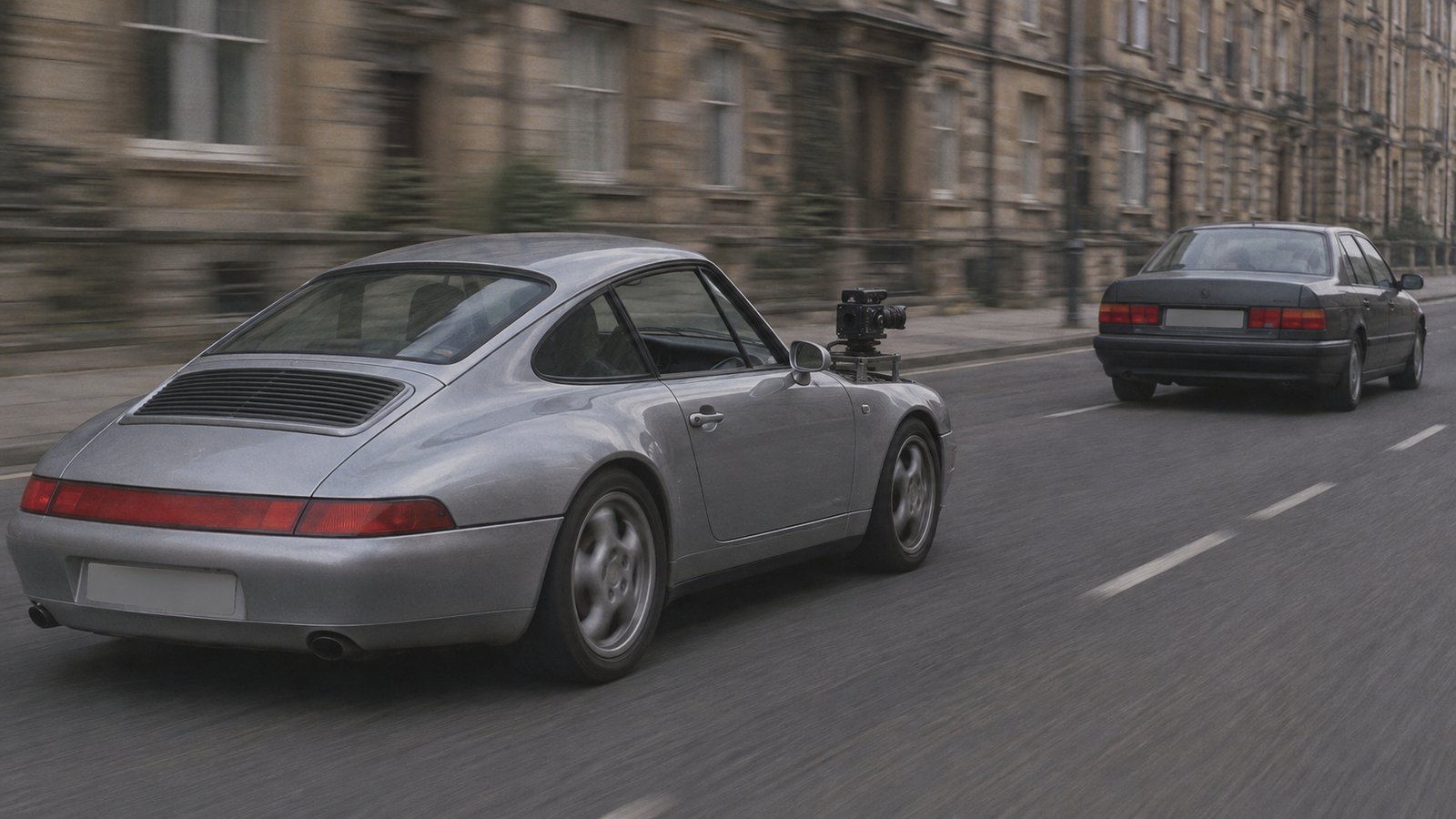
A low camera makes the road pass beneath the lens with urgency, and objects close to it move rapidly across the image. A wider view reveals the approaching traffic and the difficulty ahead. Inside the car, the camera registers the consequences: the driver's hands move, the passenger reacts, the horizon shifts. One image explains the problem, another shows the response, and a third lets us feel the forces it creates.
Frankenheimer's depth of experience meant he understood the value of keeping several of those elements within a single frame. A view through the windscreen might hold the driver's steering, the road ahead and the approaching vehicle at once, so that we understand why the wheel is moving and see what the movement achieves. Rapid cutting might otherwise reduce a chase this complicated to an impression of movement. Here we are frightened by the approaching traffic and able to admire the movement that avoids it, and the pursuit works simultaneously as drama and demonstration.
- Role
- Director of photography
- Contribution
- Shot on Super 35 with wide-angle lenses, keeping the driver, the road and the approaching traffic legible within a single frame. Supervised the action scenes with Frankenheimer after the main unit finished.
The Sound of Mechanical Effort
The cars of Ronin sound busy. Engines are repeatedly asked for acceleration, brakes work hard and tyres protest as grip is redistributed through sudden changes of direction. A rising engine note suggests that the car has found space; a sharp drop indicates that the road ahead has imposed another restriction; the sound of braking announces a change of direction before the image reveals it. Approaching engines grow louder, passing vehicles briefly occupy the foreground and impacts break the continuity of mechanical activity. In the tunnel, engines and tyres reverberate against hard surfaces and the space around the cars seems to contract.
Much of that sound was built from scratch. Supervising sound editor Mike Le Mare rented a selection of cars, had their exhausts changed and raced them around Willow Springs International Raceway in California. The re-recording mixers, Rick Alexander and Richard D. Rogers, then assembled the chases from those recordings, taking particular care that the sound of acceleration carried across each cut from inside a car to outside it.
Frankenheimer was adamant that Elia Cmiral's score should not be overused, especially during the chases. The mechanical sounds are given room to lead, and the rhythm of each sequence is set by the activity occurring within it. The cars provide their own percussion.
Tony Gibbs and the Geometry of Speed
All of this had to become a film. Editor Tony Gibbs was presented with footage from moving vehicles, fixed positions, actor coverage and every specialist rig the production had devised. Throughout the chases he alternated between three main groups of shots: angles from inside a car, angles from the front of a car and angles surveying the chase from a distance. His task was to arrange them into a sequence the audience could follow while keeping the sensation that events were moving slightly faster than the characters could absorb them.
Gibbs gives us enough information to recognise the danger ahead but rarely enough time to become comfortable with it. A new decision is required before we have absorbed the last one, and each small physical problem is resolved just in time to reveal another. What prevents the sequence from becoming exhausting is the coherence of those individual movements — the relationship between a steering input, an approaching obstacle and the car's trajectory can usually be understood from the images available.
In effect, the editor borrows the driver's process of observation and transfers it to the audience: look ahead, assess the space, recognise the complication, watch the response, repeat. Over the length of the Paris chase, that process becomes remarkably absorbing, and it allows us to appreciate how demanding the driving is without possessing the skill to perform it ourselves.
- Role
- Editor
- Contribution
- Built the chases from three families of shots — from inside the car, from the front of the car and from a distance — so that every movement could be read as it happened.
The Analogue Moment
In 1998, the techniques Frankenheimer employed were neither new nor old-fashioned. They belonged to a tradition of physical film-making refined over decades, but the industry around them was changing. Terminator 2 and Jurassic Park had demonstrated what digital visual effects could do, and computers were increasingly capable of generating objects, environments and movements that could sit convincingly within photographed material. That offered cinema extraordinary opportunities, and it began to change the nature of automotive spectacle. Dangerous movements could be modified, environments extended and sequences assembled from elements that had never occupied the same physical space.
Frankenheimer approached Ronin from another direction. He remained interested in what happened when the camera was confronted with a physical event of exceptional difficulty, and in the cooperation that event demanded between drivers, camera crews, mechanics, stunt coordinators, location teams, actors and the editor. He spent twenty-eight days shooting second-unit material himself. He could not simply ask for a BMW to move impressively through traffic; he needed to understand what the movement demanded of the car and whether the driver could achieve it in the space available. That understanding shaped the images.
To call Ronin the last great analogue car chase is not to suggest that practical automotive film-making ended in 1998. It plainly did not, and nothing here diminishes what digital cinema has since achieved. What makes Ronin distinctive is its position between two eras. It arrived when an established physical craft had reached an extraordinary level of sophistication, just as cinema was acquiring other ways of constructing spectacle. Frankenheimer had spent a lifetime developing the former, and in Ronin he brought nearly everything he had learned to a single film.
The Beauty of Competence
There is a particular pleasure in watching somebody perform a difficult task exceptionally well. A musician, a surgeon, a craftsman or an athlete commands attention through the apparent ease with which complicated actions are completed. We may not fully understand the task, but we recognise the ability. Ronin is full of that pleasure. Its characters inspect weapons, assess strangers and prepare operations with the assurance of people accustomed to specialised work, and the story continually returns to the difference between claiming expertise and possessing it.
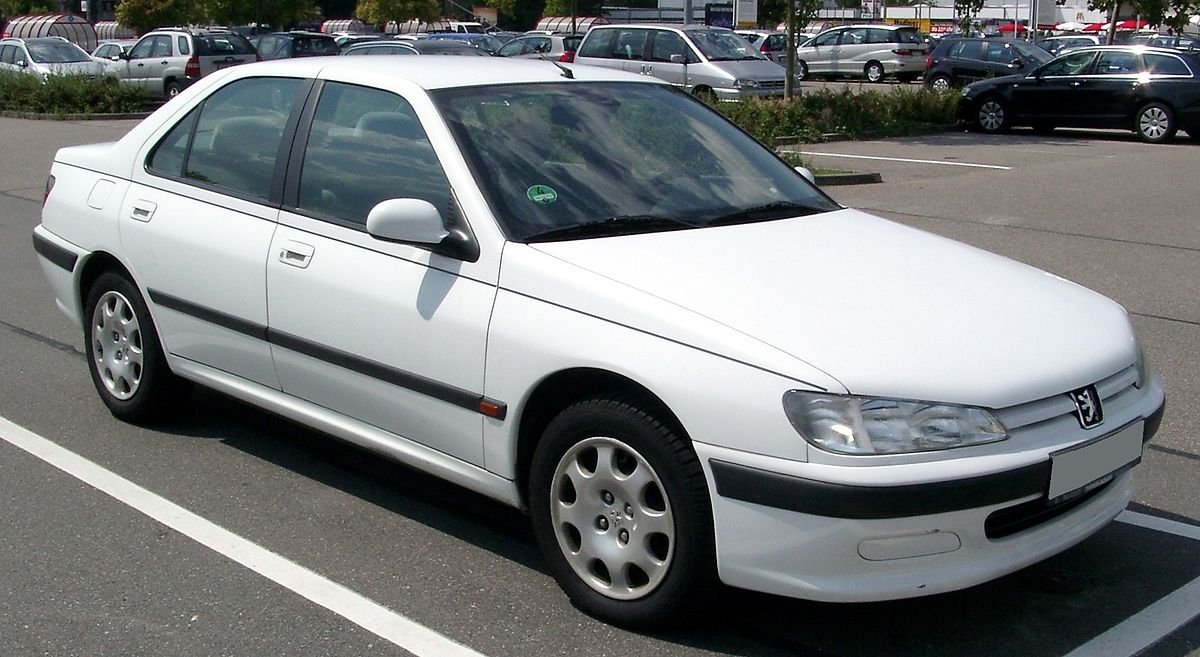

When the cars begin moving, that idea acquires physical expression. The Peugeot changes direction, the BMW negotiates another corner, the Mercedes controls its weight and the Audi finds traction. Behind each movement is somebody who understands the machine well enough to extract the required response from it. Frankenheimer respects the engineering, but he is equally interested in the knowledge needed to use it. A remarkable engine does not automatically produce a remarkable pursuit, and an accomplished driver cannot work independently of the machine — grip, weight distribution, braking and mechanical behaviour set the conditions within which he operates. The best drivers in Ronin work continuously at the edges of those conditions, and the picture car becomes interesting through that negotiation.
This is perhaps why the Peugeot 406 has acquired such affection amongst admirers of the film. Its performance on screen seems greater than its reputation off it. A front-wheel-drive family saloon, provoked into oversteer with the handbrake, is revealed to possess extraordinary expressive possibilities in exceptionally capable hands. Frankenheimer has not transformed the Peugeot into something exotic. He has demonstrated what can be done with one.
- Make
- Peugeot
- Model
- 406
- Cars Used
- Five
- Screen Driver
- Jean-Claude Lagniez
- Role
- An unglamorous front-wheel-drive family saloon that pursues the BMW against the traffic, made formidable by the way it is driven.
The Last Great Analogue Car Chase
Nearly three decades after its release, Ronin has acquired an unexpected dimension. The cars that once occupied contemporary European streets have become objects of nostalgia. The E34 BMW belongs to an era of relatively restrained performance machinery, early Audi S8s have acquired a following and the Mercedes 6.9 is recognised as one of the great achievements of its generation. Even the Peugeot 406 and the Citroën XM now evoke a particular moment in European motoring. In 1998, much of it was simply the traffic. Frankenheimer could scarcely have intended the film as a record of that landscape, but the passage of time has made his casting increasingly fascinating. The cars have aged into their own kind of distinction. The driving has not aged at all.
Watch the Paris sequence again and the most compelling moments are frequently the smallest: a correction at the wheel, the front of the BMW settling under braking, the Peugeot changing direction just before an approaching car occupies the space it has left. They are moments of extraordinary judgement. Frankenheimer understood that a camera could preserve more than the appearance of speed. It could preserve the intelligence of the people responsible for it.
The achievement of Ronin is not simply that the driving looks real. It is that we can see how difficult it is.
And how exceptionally well it was done.